How to Select Cold Rolled Coils for Your Manufacturing Needs?
Selecting the right Cold Rolled Coils is crucial for manufacturing efficiency and product quality. According to a report by Technavio, the global cold rolled steel market is projected to grow by 2.93 million tons from 2020 to 2024. The increasing demand for high-quality steel products drives this growth, making informed selection imperative.
Industry expert Dr. Emily Chen emphasizes, “The right Cold Rolled Coils can enhance the strength and durability of your final product.” This statement highlights the significance of assessing material properties, thickness, and surface finish. Businesses often overlook the importance of these factors, leading to potential production setbacks and financial losses.
Investing time into understanding the specifications of Cold Rolled Coils is essential. Manufacturers need to balance cost and quality. Rushing the decision process can result in subpar products. Each choice shapes the overall outcome. Therefore, a careful assessment of your unique manufacturing needs can lead to optimized results.

Understanding Cold Rolled Coils and Their Applications in Manufacturing
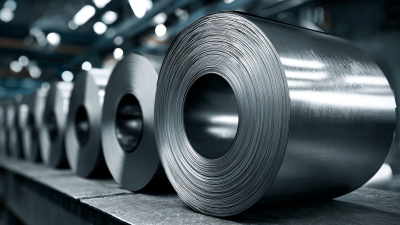
Cold rolled coils are essential in various manufacturing processes. They are widely used for applications like automotive parts, appliances, and construction materials. Understanding their properties helps manufacturers choose the right type for their needs. A coil’s finish, thickness, and strength are critical factors in determining its suitability for specific tasks.
Tips: Always consider the manufacturing process you plan to use. Different processes may require different coil properties. Engage with a reliable supplier to explore your options. Evaluate the mechanical properties based on your application's requirements. Though some manufacturers focus solely on cost, overlooking quality can lead to long-term failures.
Cold rolled coils are produced at room temperature, giving them unique advantages. They have a smooth finish and tighter tolerances. However, they are typically less ductile than hot rolled coils. Manufacturers should weigh these traits against their needs. Using the wrong type can result in wasted resources and time delays.
Tips: Always test samples before bulk orders. It helps identify potential issues. Keep track of industry standards to ensure compliance. Don't hesitate to ask for advice when uncertain about coil specifications. Reflecting on past experiences can guide better decisions.
Key Factors to Consider When Selecting Cold Rolled Coils
When selecting cold rolled coils for manufacturing, several key factors demand careful consideration. The thickness and width of the coils play a critical role in determining the suitability for your application. Ensure that the specifications match your production requirements precisely. Understand the material properties, as variations in carbon content can affect strength and ductility. Aim for consistency in quality to maintain manufacturing processes.
Tips: Always review technical data sheets. Look for documentation that outlines mechanical properties. Consistency is crucial; each batch should meet your standards.
Surface finish is another vital aspect. Cold rolled coils can come with various finishes, affecting surface quality and paint adhesion. Consider the final application. If you require a smooth finish, verify the manufacturer’s capabilities in this area. A rough surface can lead to issues downstream.
Tips: Don’t hesitate to request samples. Evaluate the surface before making large orders. This simple step can save time and resources later.
Lastly, consider the availability and lead time for the coils. In a fast-paced production environment, delays can hinder progress. Establish strong communication with suppliers to address any uncertainties. Flexibility in sourcing may help in unforeseen circumstances.
Different Grades and Specifications of Cold Rolled Coils
When selecting cold rolled coils, understanding the various grades and specifications is crucial. These coils are often used in applications requiring tight tolerances and superior surface finishes. Each grade offers different properties, such as strength, ductility, and surface quality. Common specifications include ASTM A1008 and JIS G3141. These standards dictate the chemical composition and mechanical properties of the materials.
Tip: Always check the material’s compatibility with your specific application. This could prevent costly mistakes later on. For instance, coils with higher tensile strength may be ideal for structural components but can be too rigid for delicate fabrication processes.
It’s essential to evaluate the requirements of your manufacturing process. Consider thickness, width, and the intended use of the coils. Not all cold rolled coils are suitable for every project, and misjudging these aspects can lead to failures. Sometimes, manufacturers may overlook quality certifications, leading to issues down the line.
Tip: Conduct thorough inspections and request certifications from suppliers. This adds an additional layer of reliability to your selection process. An informed choice today can save you time and resources in the future.
How to Select Cold Rolled Coils for Your Manufacturing Needs
Assessing the Quality and Performance of Cold Rolled Coils
When selecting cold rolled coils, assessing quality is crucial. Quality determines performance and suitability for various applications. Manufacturing processes heavily rely on the thickness, depth, and finish of the coils. According to the Steel Manufacturers Association, 85% of manufacturers emphasize surface finish as vital for application success.
Investing in high-quality cold rolled coils is essential. Poor quality can lead to issues like corrosion or inadequate structural integrity. For instance, coils with a higher hardness level provide better tensile strength. The International Journal of Metal Forming reports that cold rolled steel with a hardness greater than 60 HRC significantly enhances durability and reduces wear in product life cycles.
Buyers need to be aware of thickness variations. Fluctuations in thickness beyond specified tolerances may compromise end product quality. Some reports indicate that nearly 30% of production errors stem from tolerance issues. Regular audits and supplier assessments are recommended. They ensure consistent quality. Each coil's certification and testing outcomes should be scrutinized. This diligence protects manufacturers from costly project setbacks.
How to Select Cold Rolled Coils for Your Manufacturing Needs? - Assessing the Quality and Performance of Cold Rolled Coils
| Specification |
Value |
Importance for Manufacturing |
| Thickness |
0.5 mm - 3.0 mm |
Critical for determining strength and application |
| Width |
100 mm - 1500 mm |
Influences the production process and material yield |
| Yield Strength |
200 MPa - 350 MPa |
Impacts the durability and load-bearing capacity |
| Surface Finish |
Bare, Oiled, Phosphate |
Affects corrosion resistance and appearance |
| Coil Weight |
500 kg - 3000 kg |
Relevant for transport and handling considerations |
| Chemical Composition |
Steel grades like S235, S275 |
Determines properties like weldability and formability |
Cost Considerations and Supplier Selection for Cold Rolled Coils
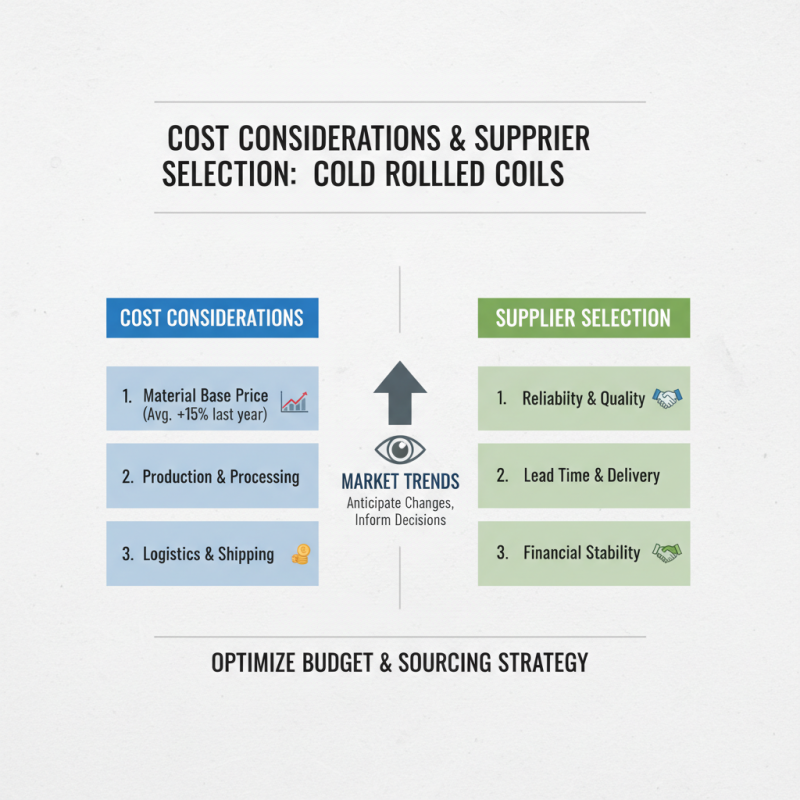
Selecting cold rolled coils for manufacturing requires careful consideration of costs and suppliers. According to industry reports, the price of cold rolled steel has fluctuated significantly, with an average increase of 15% over the past year. This variability can affect your budget and sourcing decisions. Understanding market trends can help you anticipate changes and make informed choices.
When evaluating suppliers, consider their reliability and reputation. A report from the Steel Manufacturers Association indicates that 70% of businesses with established supplier relationships report higher satisfaction. Look for suppliers with a solid track record in quality and timely delivery. Communication is key; ensure they can respond to your needs promptly.
**Tip:** Always compare multiple quotes. Prices may vary widely, even for similar grades and specifications.
**Tip:** Consider conducting supplier audits. This process can reveal inconsistencies in quality or service, helping you avoid potential issues.
Being proactive in supplier selection can save costs and improve production efficiency. Make data-driven decisions to optimize your coil procurement strategy.