2026 How to Choose the Right Aluminum Plate for Your Projects?
Selecting the right Aluminum Plate for your project can significantly impact the outcome. Whether you are building something structural or artistic, the choice matters. The variety of aluminum plates available can be overwhelming. Different thicknesses, alloys, and finishes can affect both performance and appearance.
Experience plays a crucial role in making this decision. Understanding your project's specific requirements is key. Not every aluminum plate is suitable for every application. For example, if your project involves high corrosion resistance, a marine-grade aluminum plate might be required. However, not all projects require such a specialized plate.
Seeking expert advice can be beneficial. Consulting manufacturers or suppliers can provide insights that enhance your decision-making process. Be aware of your project’s limitations and your budget. Choosing the right Aluminum Plate is a balance between needs and resources. Remember that the best choice may not always be the most expensive option. Reflect on how different choices may lead to varied outcomes for your projects.

Understanding the Basics of Aluminum Plates for Various Applications
When it comes to selecting aluminum plates, understanding their basics is crucial. Aluminum plates come in various grades, thicknesses, and finishes. Each type serves specific applications, making choice critical for project success. Commonly, the 6061 and 5083 grades are popular, but each type provides unique characteristics. For instance, 6061 is lightweight and corrosion-resistant, suited for structural applications.
Tips: Always consider the project’s environment. High moisture areas require plates with enhanced corrosion resistance. Choose the right thickness based on weight and strength needs. Too thin might compromise integrity. Too thick can add unnecessary weight.
In addition, the finishing of the aluminum plate can impact its longevity and appearance. Anodized finishes enhance resistance to wear and tear. However, a polished finish can add aesthetic appeal. Balance function and style based on your project's unique requirements. Remember, the best choice may not always fit into a simple category; reevaluation is essential when new insights arise.
Understanding Aluminum Plate Usage by Industry
Key Factors to Consider When Choosing Aluminum Plates
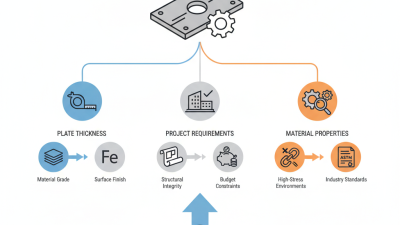
When selecting aluminum plates, several key factors come into play. Understanding the specific requirements of your project is essential. Consider the plate's thickness, which directly impacts weight and strength. Thicker plates offer more durability but may be heavier than desired.
The alloy type also matters. Different alloys provide varying levels of strength and corrosion resistance. For outdoor projects, look for an alloy with superior weather resistance. For structural applications, higher strength alloys may be necessary.
Tips: Always assess the mechanical properties you need. This will guide you in choosing the right alloy. Think about how these plates will be processed. Some alloys are easier to weld or machine than others.
Additionally, don’t forget about the finish. A matte finish may suit some applications better than a polished look. Consider your project requirements; the right finish can enhance functionality. Make the choice that aligns both with aesthetics and performance.
Exploring Different Types of Aluminum Alloys for Projects
When selecting the right aluminum alloy for your project, understanding the variations is crucial. Aluminum alloys are categorized into two main types: wrought and cast. Wrought alloys are shaped through processes like rolling or extrusion. They offer excellent mechanical properties and are often used in high-stress applications. Casting alloys, on the other hand, are poured into molds. They are generally used for complex shapes but may have lower strength than wrought counterparts.
Each alloy is designated by a four-digit number. The first digit indicates the primary alloying element. For example, 1000-series alloys are nearly pure aluminum, while the 6000-series contains magnesium and silicon. Depending on your needs, some alloys will perform better than others. For instance, 7075, a high-strength alloy, is well-suited for aerospace applications. However, it’s more challenging to weld than softer alloys like 3003.
Knowing these details can help refine your choice. The key is to match the alloy properties to your project's requirements. Sometimes, you may face trade-offs. Higher strength might sacrifice weldability, or corrosion resistance could diminish overall strength. Such decisions often lead to rethinking your approach. It's a journey of balancing needs to find the most suitable aluminum plate for your tasks.
Evaluating Thickness and Dimensions for Specific Needs
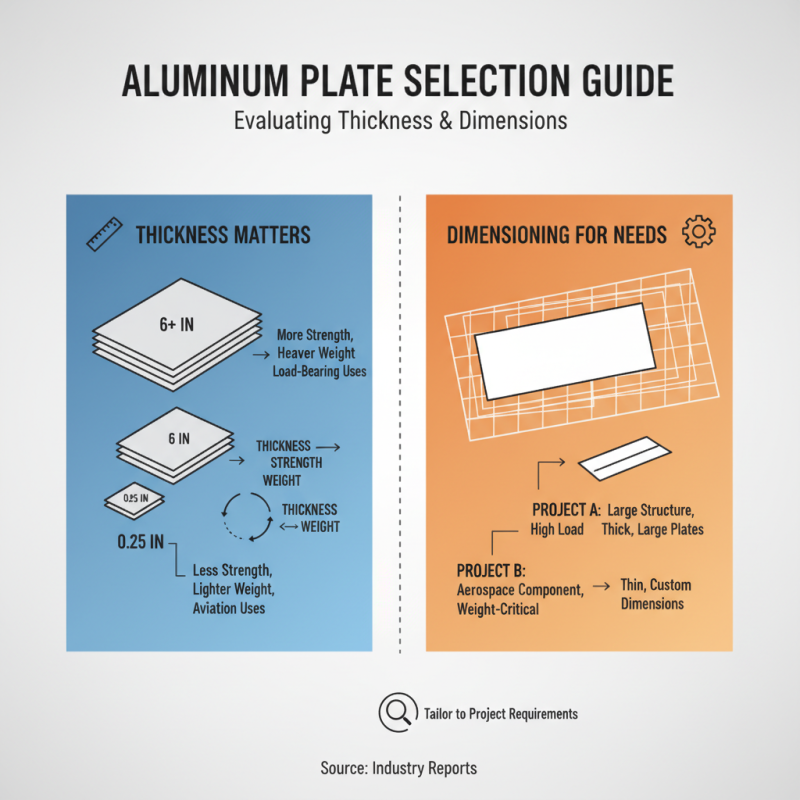
Choosing the right aluminum plate requires careful consideration of thickness and dimensions tailored to your project. Aluminum plates are available in varying thicknesses, typically ranging from 0.25 inches to over 6 inches. According to industry reports, thickness impacts strength and weight. Thicker plates provide better load-bearing capacity but increase overall weight, which can be a drawback in aviation applications.
Understanding specific needs is essential. For example, structural applications often require plates thicker than 0.5 inches for enhanced strength. In contrast, applications like automotive manufacturing may benefit from thinner plates, around 0.25 inches, allowing for lighter designs. The dimensions also vary greatly. Sheet sizes commonly range from 4x8 feet to larger dimensions, impacting fabrication processes.
While it's crucial to choose ideal thickness and dimensions, there are also challenges. Oversized plates may yield increased costs and difficult handling. Moreover, underestimating the required thickness can lead to structural failures. Industry data shows a significant percentage of project delays stem from miscalculating these specifications. Balancing strength, weight, and application is vital for successful outcomes.
Cost versus Performance: Finding the Right Balance in Aluminum Plates
Choosing the right aluminum plate for your projects can be challenging. The balance between cost and performance is crucial. A high-performance plate may come at a higher price, but it often results in better longevity and resistance to wear. Conversely, a lower-cost option might save money initially but could lead to higher expenses down the line due to frequent replacements or repairs.
When selecting aluminum plates, consider their specific applications. Certain projects require lightweight materials, while others need stronger support. Evaluate the stresses the plate will endure. This can determine the need for extra thickness or different alloy grades. Sometimes, the most cost-effective choice seems tempting, but understanding long-term implications is essential.
Identifying performance requirements is critical. Not every project demands the highest-grade aluminum. In some cases, an average option may suffice. However, pay attention to any potential hidden costs. They can arise from inadequate materials leading to project delays or failures. Always weigh these factors carefully to find the right balance for your needs.