Top 10 Advantages of Using Square Pipe in Construction Projects?
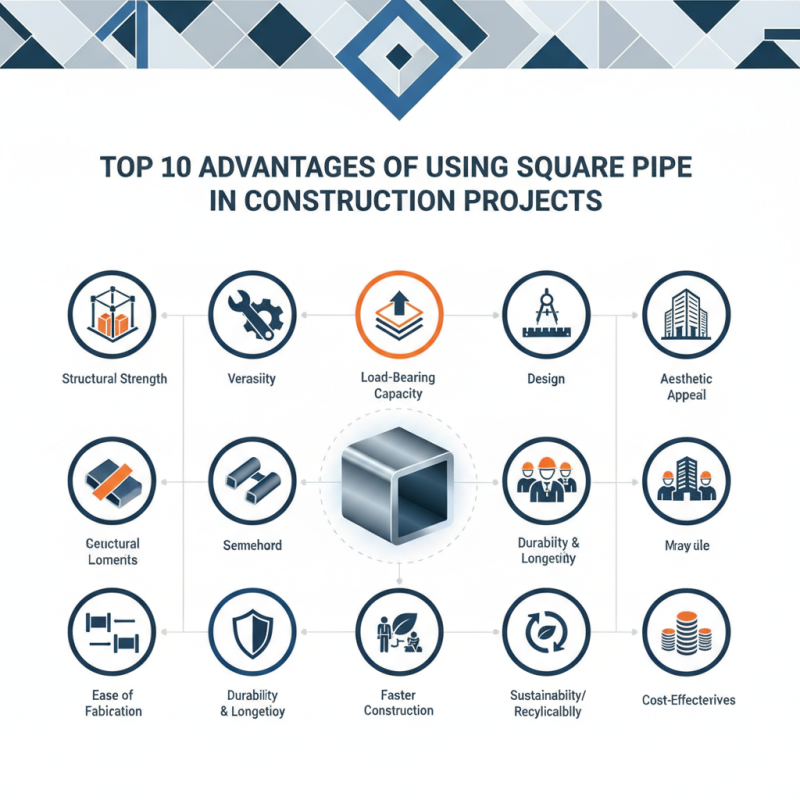
In the realm of construction, selecting the right materials is crucial. Among these, Square Pipe stands out as a popular choice. Its unique shape and structural advantages make it a favorite among builders. This article explores the top ten advantages of using Square Pipe in construction projects.
Square Pipe is known for its versatility and strength. It can support heavy loads and adapt to various design requirements. Many architects and engineers prefer it for both residential and commercial projects. However, not all applications may benefit from its use, leading to potential challenges. Understanding these aspects is essential for informed decision-making.
Moreover, Square Pipe can enhance the aesthetic appeal of a project. Its clean lines and modern look add to a building’s visual impact. Yet, relying solely on its advantages without considering limitations could lead to oversights. Balancing benefits with strategic planning is vital for successful outcomes in construction ventures.
Benefits of Structural Integrity of Square Pipes in Building Frameworks
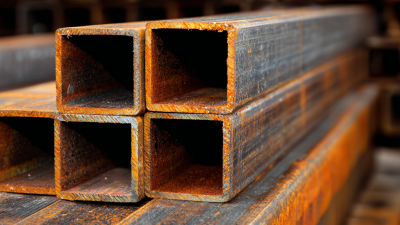
Square pipes offer numerous advantages, particularly when it comes to structural integrity in construction projects. Their uniform shape provides better load distribution compared to round pipes. This ensures stability across various building frameworks. When used in beams and columns, square pipes resist bending and deformation effectively, which is crucial during extreme weather conditions.
Another significant benefit of square pipes is their versatility. They can be easily cut and joined, allowing for complex designs. This adaptability often reduces construction time, but it also requires careful planning and skilled labor. A poorly executed join can compromise the entire structure's strength. Proper alignment and welding are essential; otherwise, the benefits may turn into drawbacks.
Additionally, square pipes can be coated or treated to enhance their durability. However, this process adds costs and complexity. In some cases, it may be tempting to cut corners, leading to potential long-term issues. Balancing cost and quality should always be a priority. While square pipes are generally reliable, thorough inspections are necessary to ensure they meet safety standards.
Top 10 Advantages of Using Square Pipe in Construction Projects
Cost-Effectiveness: How Square Pipes Reduce Overall Construction Expenses
Using square pipes in construction can lead to significant cost savings. These pipes are typically made from steel or aluminum. They provide strength without adding unnecessary weight. This makes them easier to handle and transport. Consequently, construction teams can save on labor costs.
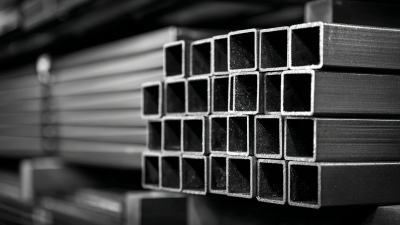
Moreover, square pipes can be cut and shaped with precision. This reduces waste during production. When there’s less waste, the overall material cost decreases. In addition, square pipes have a uniform structure that allows for efficient stacking and storage. This maximizes space on the construction site, lowering storage costs too.
Yet, it's essential to consider some trade-offs. While square pipes may be economical, the initial investment might seem high for small projects. Many people underestimate this upfront cost. Additionally, their heavy weight can complicate transportation for some operations. It’s crucial to evaluate these factors to ensure that square pipes are the right choice for a specific project.
Versatility: Applications of Square Pipes in Various Construction Environments
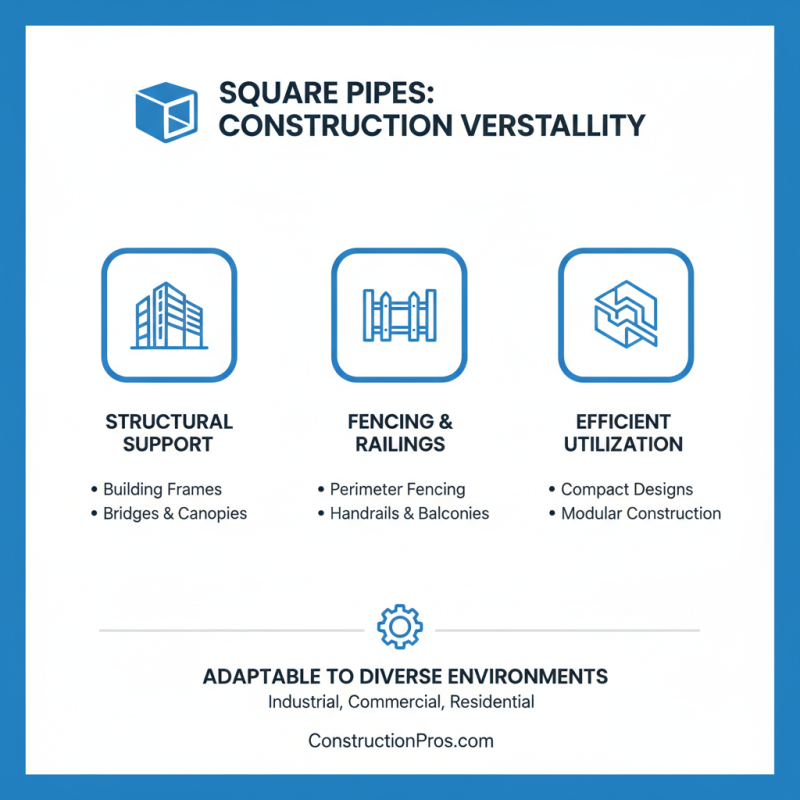
Square pipes are increasingly popular in construction due to their versatility. They can be used in various applications, adapting to different environments with ease. From structural support in buildings to fencing and railings, their usage is widespread. Their uniform shape allows for efficient space utilization, making them ideal for tight construction areas.
In residential projects, square pipes serve as sturdy frames for windows and doors. In commercial use, they are often seen in shelving and display units. However, while square pipes offer many advantages, they require careful planning during installation. Misalignment can lead to structural issues. Therefore, the skills of the workers must be up to par to avoid costly mistakes.
Even in landscaping, square pipes can be effective. They can create modern garden borders or unique outdoor furniture. Yet, attention to aesthetics is crucial. Using poorly finished edges may detract from the overall design. This highlights the importance of combining functionality with creativity in construction projects.
Ease of Handling and Installation: Advantages of Square Pipe Usage
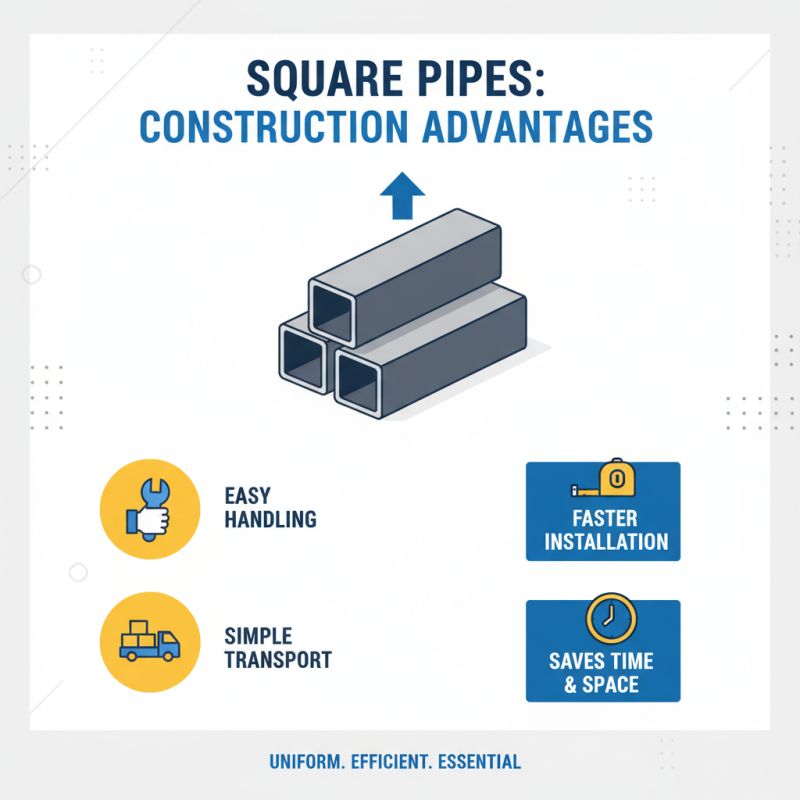
Square pipes have gained popularity in construction for good reason. One of the most notable benefits is their ease of handling and installation. Square pipes are uniform in shape, which makes them stackable and easy to transport. Crews often find them simpler to manage on job sites where space can be tight. This reduces the time spent on moving materials.
Installation is also more straightforward. The right angles make it easier to create secure connections. Builders can align the pipes quickly, which saves time during assembly. However, some workers may need training to master the techniques involved, which can delay projects. It's crucial to consider this time investment when planning.
Furthermore, the design of square pipes can complicate some aspects. Their rigidity might make it difficult in some unique structures. Flexibility is sometimes required, and square pipes lack this. It's essential to weigh these factors against the benefits. Overall, while square pipes offer advantages, careful thought is necessary to avoid installation challenges.
Aesthetic Appeal: The Visual Advantages of Square Pipes in Design Projects
Square pipes offer a unique aesthetic appeal in design projects. Their symmetrical form provides a sense of balance that is hard to achieve with round pipes. This uniform shape can enhance modern architectural styles, giving buildings a polished look. The clean lines and sharp angles of square pipes add a contemporary flair, making them suitable for both interior and exterior applications.
One major advantage of square pipes is their versatility. They can efficiently accommodate various design elements, from structural integrity to decorative features. Additionally, square pipes can serve as a canvas for creativity. Designers can experiment with finishes, colors, and textures more easily than with rounded options.
Tip: When planning your next project, consider the scale of the design. Large spaces often benefit from the bold outline of square pipes, while smaller areas may feel overwhelmed. Balance is key.
Another consideration is the potential challenges. Square pipes can be more challenging to work with during installation due to their rigidity. They may not fit as seamlessly in some contexts compared to rounded pipes.
Tip: Always consult with professionals before making final decisions. Their insights can help you avoid costly mistakes and ensure that your design vision is realized effectively.